Have you ever actually determined if your surveillance system can actually catch a face, read a license plate or alert someone to act in real time? For most businesses, the honest answer is never and the system has been running on assumption ever since. In 2026, a surveillance system installed four years ago is already a generation behind on resolution, AI analytics, cybersecurity, and integration capability. Most business owners are thinking of what their system can do and how it can do so under lab conditions, but incidents become losses when the gap between what they think it does and what it actually does in real conditions is too wide. These seven signs help to close that gap before an incident happens or it becomes a need to talk.
Sign 1: Your Footage Cannot Identify a Face or a License Plate
Resolution is not a technical preference it is the difference between footage that supports a police investigation and footage that confirms something happened without telling anyone who did it.
The pre-2019 analog CCTV systems are generally able to capture up to 720p or less. Modern commercial surveillance standards in 2026 operate at 4K a resolution gap that makes facial identification and license plate recognition genuinely possible rather than aspirational. Insurance underwriters and law enforcement agencies have established minimum resolution requirements for footage to be able to be used as evidence. If your current system cannot meet those thresholds, it is generating liability exposure rather than reducing it.
Sign 2: Remote Access Is Unreliable or Nonexistent
A surveillance system that requires physical presence to review footage has already failed the response time test. When any manager arrives at the DVR unit to investigate an alert that occurred overnight, the opportunity to take any action which might make a difference is long gone, by hours.
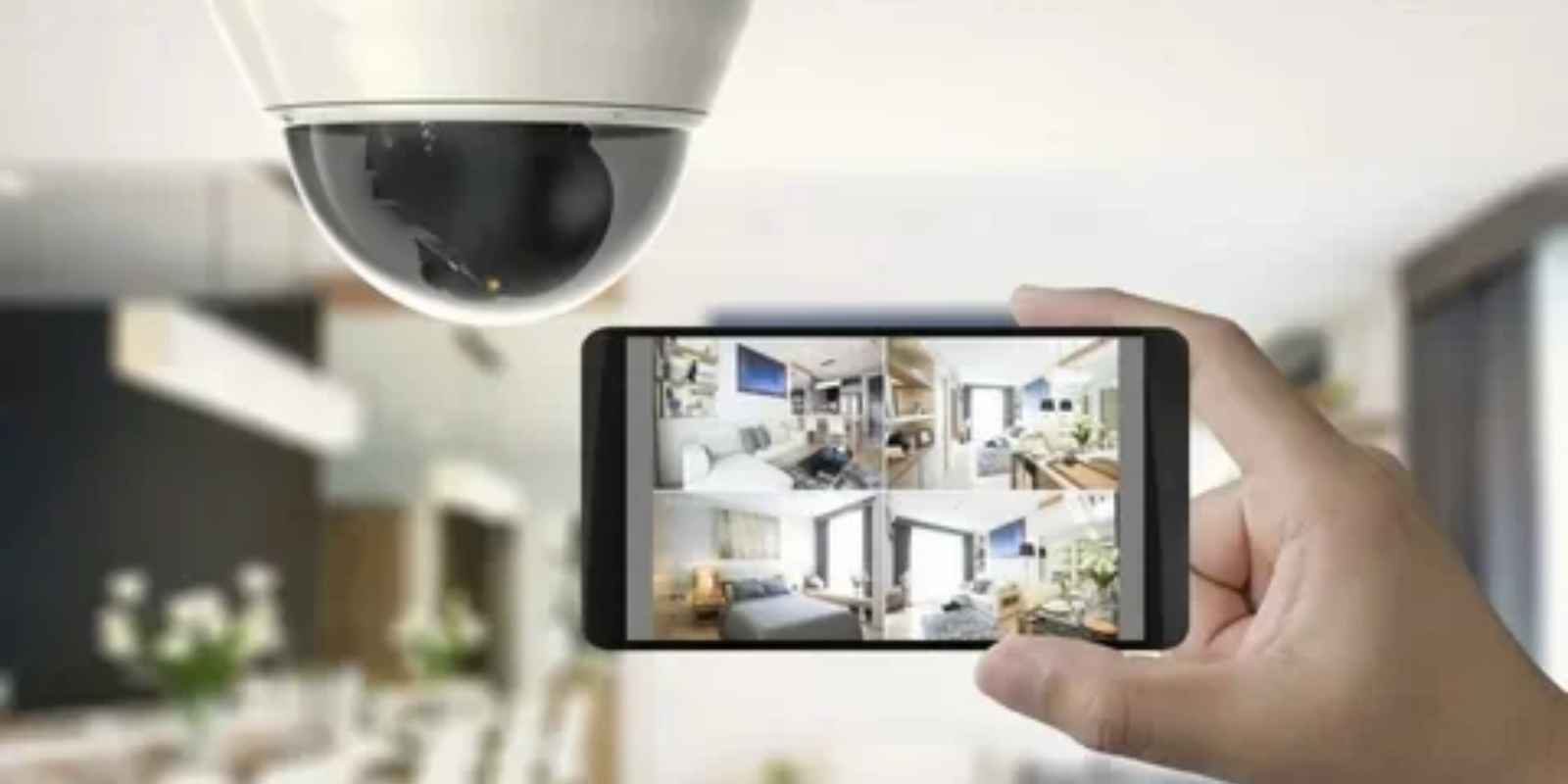
Cloud-based surveillance platforms provide encrypted live feeds, verification of alerts in real-time – from any device, in three seconds or less – in 2026. A system that cannot match that response window is not a real-time security tool it is a delayed documentation system. Multi-site businesses can’t do without remote access infrastructure. Without the ability to control security from sites, it would be impossible to keep staff on-site 24/7.
Sign 3: False Alerts Have Made Your Team Stop Responding
Alert fatigue is a well documented security failure mode and is entirely due to surveillance systems that cannot differentiate between useful alerts and all the other motion. If a system alerts staff to the passing delivery vehicle, to a bird landing on a fence and to an actual intruder, staff will learn within weeks that they should ignore all alerts.
A 2024 study by Genetec found that security operators managing traditional motion-based systems spent up to 70 percent of their shift investigating false positives. On state-of-the-art surveillance systems, AI video analytics lower false alarm rates by up to 95 percent, by identifying the motion of humans, animals, or vehicles before notifying. If your team’s default response to a security alert is to dismiss it, the system has already failed its primary function.

Sign 4: Your Coverage Has Not Kept Pace With Your Property
A surveillance system designed for a property’s 2018 footprint does not automatically cover a 2026 version of the same property. Each addition another entrance, an extra bay in the warehouse, another configured parking area, another floor introduces potential blind spots that the original installation could not possibly have considered.
Most businesses have never formally audited their camera coverage against their current floor plan. A professional surveillance audit will outline all of the areas that are covered by the current cameras, their fields of view, and their overlaps, and also show you any gaps that do not represent a failure of the current system, but simply because the property has outgrown the system. Any blind spots identified in an audit do not come with any cost. Blind spots identified in an incident are much more expensive.
Sign 5: Your System Cannot Integrate With Access Control or Alarms
A surveillance system that is not integrated with any other security layer in the building is not a security platform, it is a recording device that is necessarily on a wall. In 2026, the operational standard for commercial security is full integration: cameras, access control, alarm systems, visitor management, and monitoring platforms communicating through a single connected infrastructure.
Integration results in concrete, measurable security results. If a door access sensor activates at 2am, a built-in system automatically marks the camera that monitors that door, alerts the monitoring center with a verified clip and locks nearby doors in seconds without manual intervention. A separate machine records the same thing and brings it up the following morning when the person checks the tape. It is between that response time that incidents turn to losses.
Sign 6: Your Firmware Has Not Been Updated in Over 12 Months
In 2025, a report from the Cybersecurity and Infrastructure Security Agency (CISA) identified a number of connected security devices running on unpatched firmware as one of the top commercial network entry points in the U.S. and responsible for a large percentage of successful breaches at small and mid-sized businesses. The leak of a camera doesn’t just make a surveillance video available, it gives a network foothold to financial systems, customer data, and internal communications.
Manufacturers often publish firmware updates every 3-6 months with newly found vulnerabilities. If the vendor is no longer supporting the patching of the system, either because the hardware is no longer supported or for some other reason, then it is not a security asset. This is an open door with a camera focused on it.
Sign 7: You Are Spending More on Repairs Than Performance Justifies
The “repair-versus-replace” point of commercial surveillance systems follows a standard pattern: maintenance expenses start to increase in Year 5 or 7, parts are becoming less available as manufacturers phase out legacy equipment, and every repair brings the system back to a lower level of performance, but still below the current commercial standard.
When annual maintenance costs across a surveillance system approach 30 percent of a replacement system’s cost, the financial case for continued repair has broken down. The security case broke down earlier. A system that needs to be visited by a technician every quarter to remain functional is creating downtime opportunities, unpredictable performance and increasing total cost of ownership, and even with repair that cannot be solved because the resolution, integration and analytics are limited.
The 2026 Commercial Surveillance Upgrade Framework
Before contacting any provider, complete this four-step assessment:
Step 1 Resolution audit: Pull footage from your current system and attempt to identify a face at ten feet and a license plate at twenty-five feet. If either fails, resolution is the first upgrade priority.
Step 2 Coverage mapping: Compare your current camera positions against your current property footprint. Mark every area without camera coverage. Any unmarked zone is a documented blind spot.
Step 3 Integration inventory: List every security system operating in your building cameras, access control, alarms, visitor management. Identify which ones communicate with each other and which operate independently. Any isolated system is an integration gap.
Step 4 Firmware check: Log into every connected camera and DVR unit. Check the current firmware version against the manufacturer’s latest release. Any device more than two versions behind is a cybersecurity vulnerability.
This 4-step output will provide any security provider with the necessary details to create a security upgrade plan by addressing any documented gaps instead of replacing functioning infrastructure for no reason.
Conclusion
Every sign in this list represents a specific, documented gap between what a surveillance system is doing and what commercial security standards in 2026 require. Resolution, which will not yield the evidence. The ability to access remotely but not to respond in real time. Alert systems with trained staff to ignore them. Insurance coverage that did not meet the value of the property at all times. Security silos—places where a security layer is separated from other security layers. Vulnerabilities in the firmware that allow cameras to become entry points into the network. Maintenance expenses that cover a losing wager.
At CTD Security, we understand that for businesses that are prepared to fill in all of those holes with a system that suits their property, risk profile and operational needs, we can provide you with the professional assessment, system design and installation skills to ensure the next time your surveillance system records an incident, it can do more than just show you what’s happening, it can respond.